How Summer Storms Damage Roofs and Gutters in Arkansas
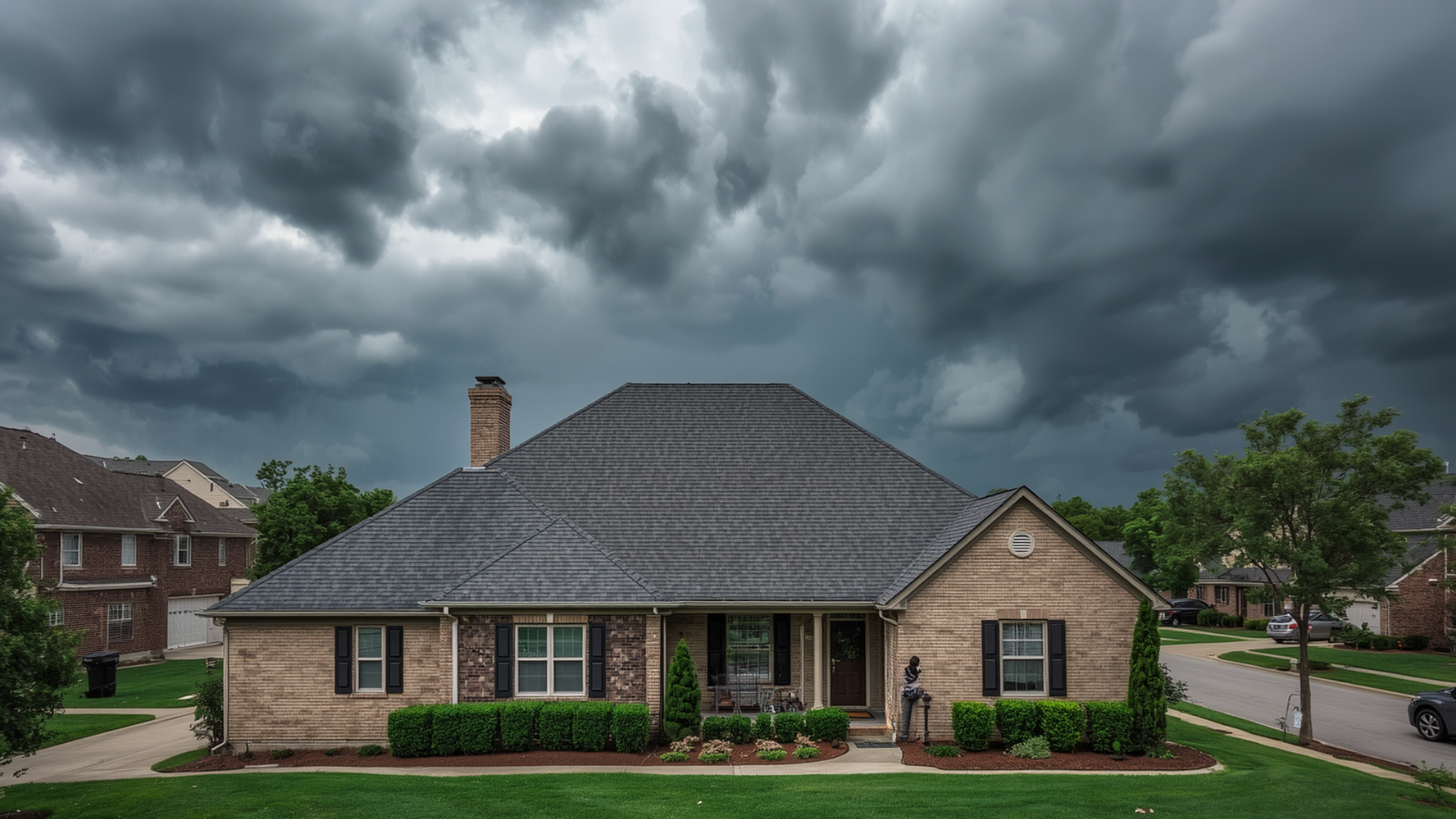
Arkansas summer storms do not play around.

One minute the sky looks fine. The next minute, the wind is pushing rain sideways, branches are bouncing across the yard, and your gutters are trying to handle more water than they were ever emotionally prepared for.
For homeowners in Little Rock, North Little Rock, Cabot, Jacksonville, Sheridan, and surrounding Central Arkansas communities, storm damage is not always obvious right away. Sometimes the roof looks fine from the driveway. Sometimes the gutters are still hanging where they belong. Sometimes there is no immediate leak.
That does not mean everything is okay.
Summer storms can damage shingles, loosen flashing, dent gutters, clog downspouts, pull fascia boards, and create small roof problems that turn into expensive repairs later.
According to the National Weather Service, severe thunderstorms can produce hail one inch or larger and wind gusts of 58 mph or higher. Hail that size can damage roofs, vehicles, and property, while strong winds can break branches, knock over trees, and cause structural damage.
That is why a roof and gutter inspection after a strong storm is not overkill. It is basic home maintenance.
Do not wait until a small storm problem becomes a ceiling stain.
If your home was hit by heavy rain, wind, or hail, contact MT’s Gutters & Roofing for a roof and gutter inspection in Central Arkansas.
We proudly serve Little Rock, North Little Rock, Cabot, Jacksonville, Sheridan, and nearby communities.
Why Arkansas Summer Storms Are Hard on Roofs and Gutters
Roofs and gutters take the first hit when storms move through.
Your roof protects your home from rain, wind, hail, falling limbs, and flying debris. Your gutter system moves water away from the roofline, siding, landscaping, and foundation.
When both systems are working properly, your home has a fighting chance.
When either one is damaged, water starts looking for a new path.
That is usually when the problems begin.
A summer storm can cause damage through:
- Heavy rain
- Strong wind
- Hail
- Falling branches
- Clogged gutters
- Loose shingles
- Damaged flashing
- Overflowing downspouts
- Pulled or sagging gutters
The frustrating part is that storm damage is not always dramatic. You may not see a giant hole in the roof. You may not see shingles all over the yard.
Sometimes the damage is subtle.
- A lifted shingle.
- A cracked seal.
- A dented gutter.
- A loose fastener.
- A downspout packed with leaves and roof granules.
That is the kind of damage that quietly gets worse.
What Wind Can Do to Your Roof
High wind is one of the most common causes of storm-related roof damage.
Wind can lift shingles, loosen nails, break seals, and expose parts of the roof that are supposed to stay protected. Once shingles are lifted or shifted, rain can get underneath them.
That does not always create a leak immediately.
At first, the roof may still look normal from the ground. But once water starts getting under the surface, it can affect the decking, attic, insulation, ceilings, and walls.
Signs of wind damage may include:
- Missing shingles
- Lifted or curled shingles
- Loose shingles
- Exposed nails
- Shingle pieces in the yard
- Bent flashing
- Loose ridge caps
- Water stains inside the home
If you see shingles in the yard after a storm, that is not a “wait and see” situation. Your roof has already told you something.
Listen to the roof. It is not being dramatic.
How Hail Damages Roofs and Gutters
Hail damage can be sneaky.
Large hail can bruise shingles, knock off protective granules, dent metal vents, damage flashing, and leave marks on gutters. Even smaller hail can cause problems when it comes down hard enough or long enough.
Shingle granules matter because they help protect the roof from sun and weather exposure. When hail knocks those granules loose, the roof can age faster.
Signs of hail damage may include:
- Small dents on gutters
- Dents on metal vents or flashing
- Granules collecting in gutters or downspouts
- Dark marks or bruising on shingles
- Damaged roof vents
- Dented downspouts
- Chipped paint near gutters or fascia
One of the easiest places to spot possible hail damage is on your gutters and downspouts. If the metal is dented, there is a decent chance the roof took a hit too.
That does not automatically mean you need a new roof. But it does mean the roof should be checked.
Heavy Rain Can Expose Weak Spots Fast
Heavy rain has a way of finding every weak spot your home has been hiding.
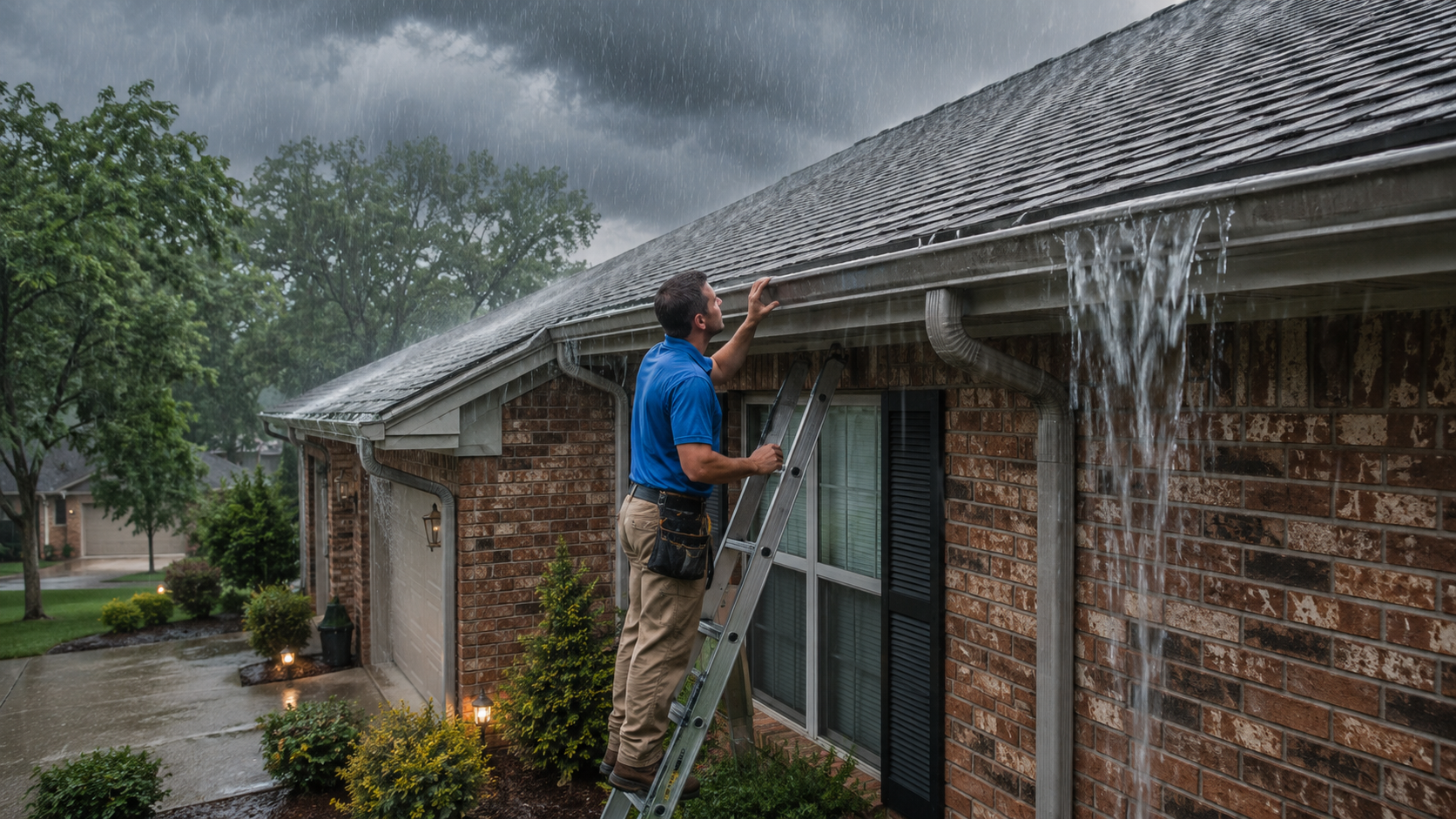
A small roof issue that did not matter during light rain may suddenly show up during a summer downpour. Water can get under shingles, around flashing, behind fascia, and into areas where it does not belong.
Common rain-related problems include:
Roof leaks
Ceiling stains
Wet attic insulation
Water around chimneys
Water near skylights
Overflowing gutters
Pooling near the foundation
Rotting fascia boards
If you notice a ceiling stain after a storm, do not assume it is new damage from that one storm. Many leaks start small and grow over time.
The storm may not have created the problem.
It may have exposed it.
What Storms Can Do to Gutters
Gutters are often treated like an accessory, but they are part of your home’s water control system.
When gutters are damaged, clogged, loose, or pulling away from the house, water can spill over the edge and land where it should not.
Storms can damage gutters by:
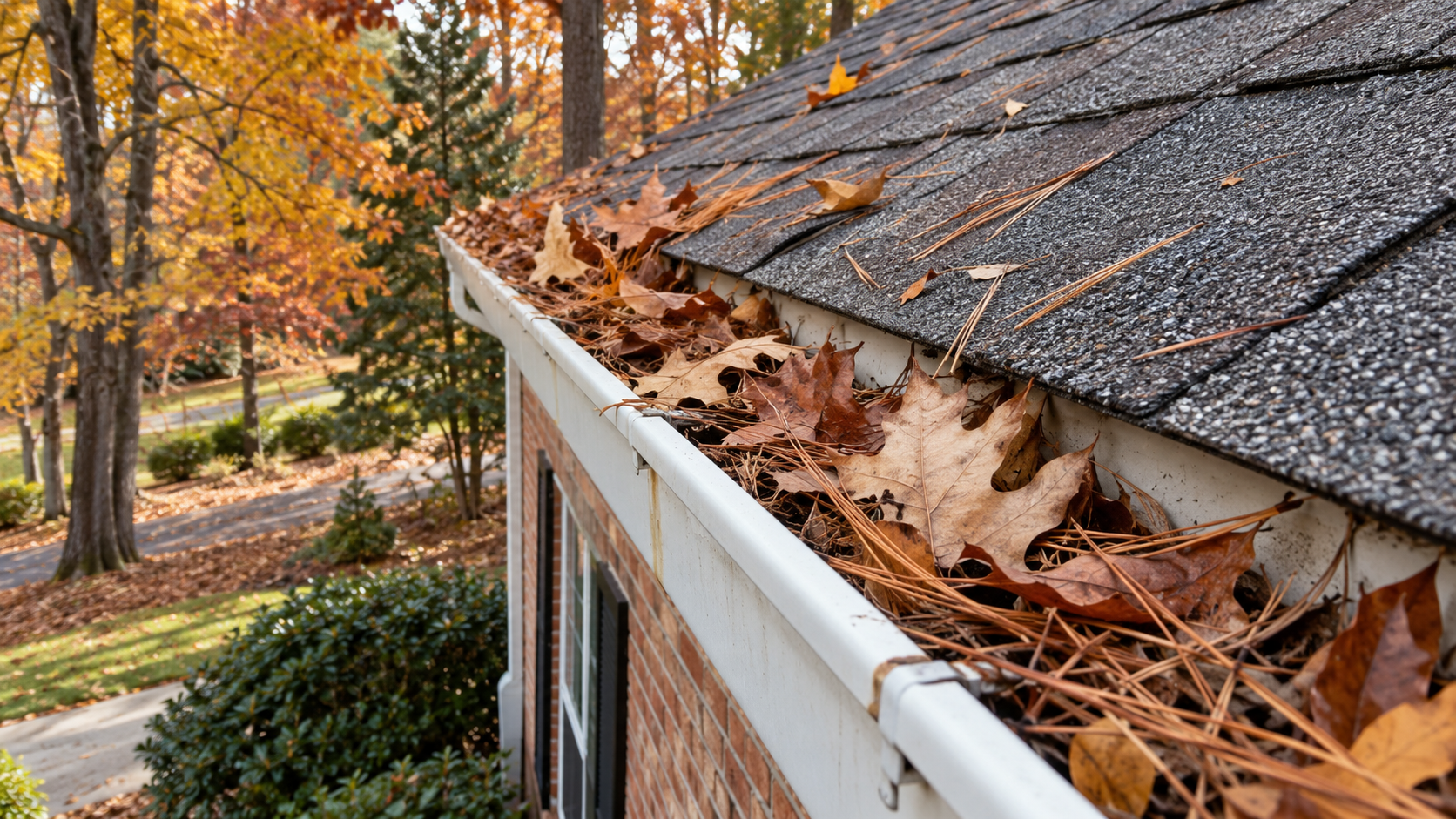
- Filling them with leaves and debris
- Knocking them loose with falling branches
- Bending sections with wind or hail
- Pulling fasteners away from fascia
- Separating gutter joints
- Clogging downspouts
- Causing water to overflow near the roofline
Overflowing gutters can lead to bigger problems, including roof edge damage, fascia rot, siding stains, landscape erosion, and foundation concerns.
That is why storm damage gutter repair matters.
A gutter problem may look small, but water damage does not need a large invitation. It just needs time.
Why Clogged Gutters Make Storm Damage Worse
A storm does not have to tear your gutters off the house to cause problems.
Sometimes the biggest issue is blockage.
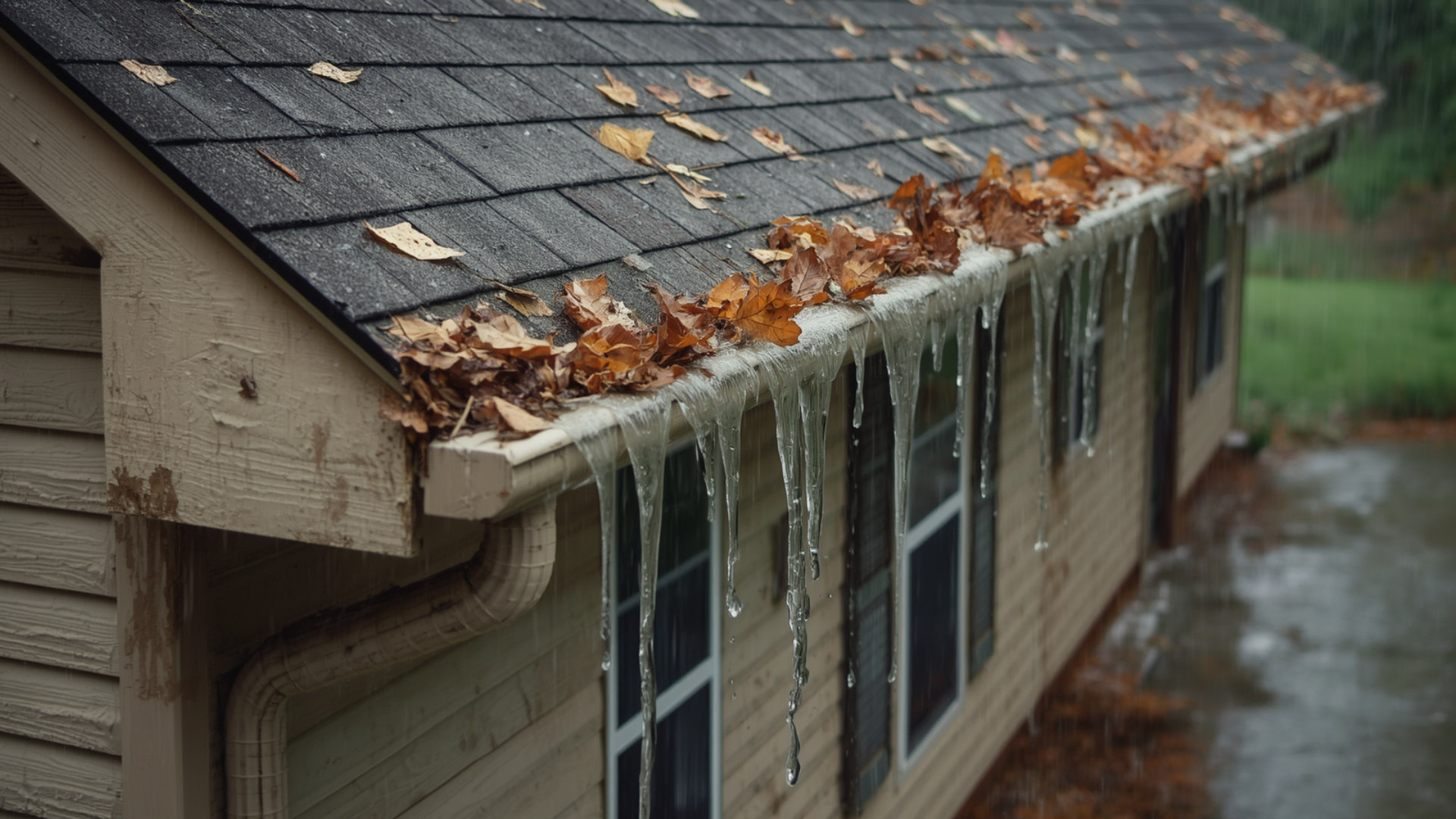
When gutters are full of leaves, sticks, granules, and roof debris, rainwater cannot move through the system properly. Instead, water spills over the sides, backs up under the roof edge, or dumps near the foundation.
After a storm, check for:
- Water spilling over the gutters
- Sagging gutter sections
- Debris packed in corners
- Downspouts not draining
- Water pooling near the home
- Mud or erosion below downspouts
- Gutters pulling away from fascia
If your gutters overflow during every heavy rain, the problem may be clogging, poor slope, damaged sections, undersized gutters, or bad drainage.
Either way, the water is telling you something.
And water does not care about your weekend plans.
Signs You Should Schedule a Roof or Gutter Inspection After a Storm
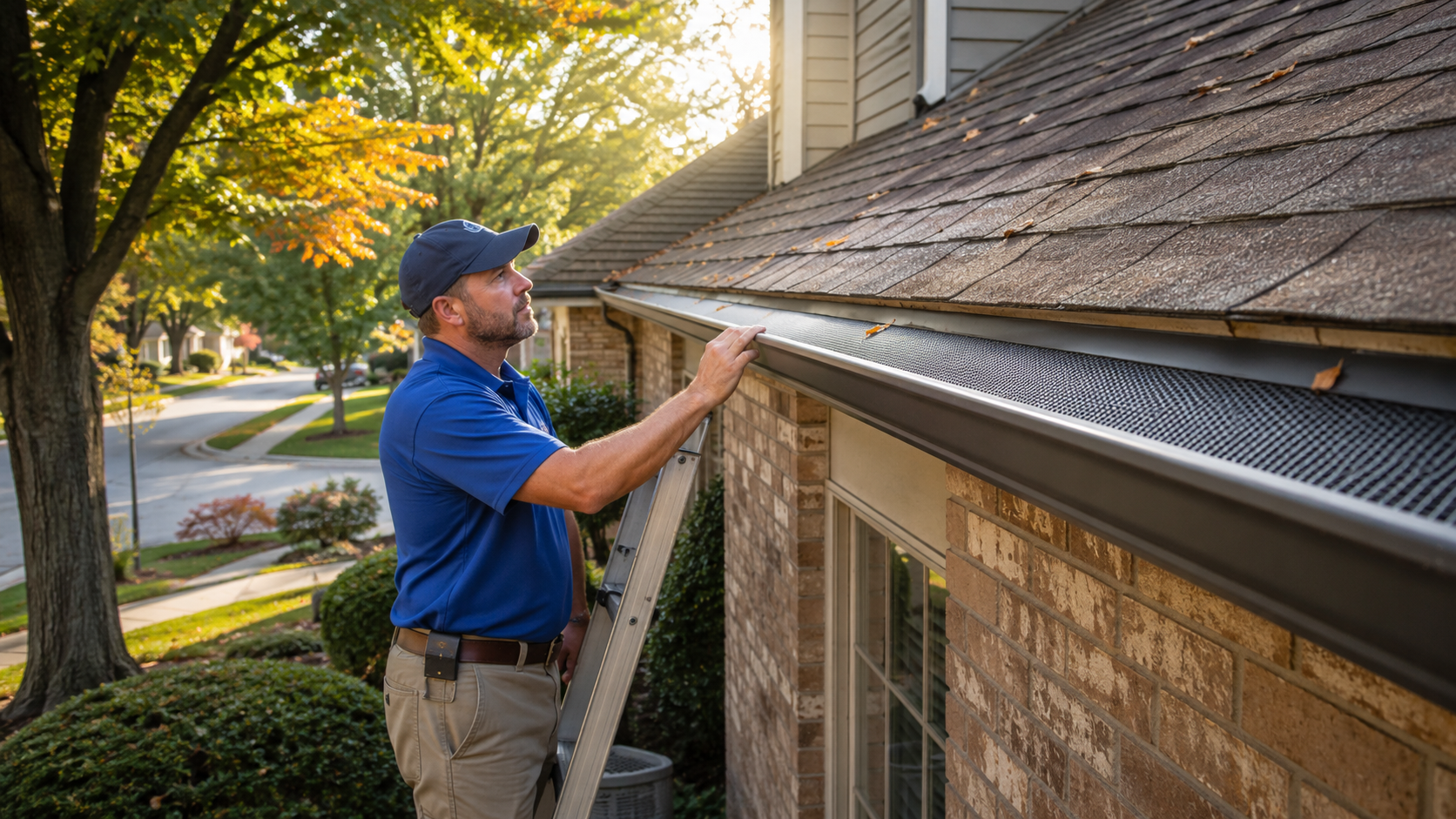
You do not need to climb on your roof to spot warning signs. In fact, you should not climb on a wet or storm-damaged roof. That is a great way to turn a home repair problem into an emergency room story.
Instead, look from the ground.
Call for a professional inspection if you notice:
- Missing shingles
- Shingles in the yard
- Dented gutters
- Loose gutters
- Water stains on ceilings
- Water in the attic
- Branches on the roof
- Granules near downspouts
- Gutters overflowing
- Fascia damage
- Bent flashing
- New leaks after heavy rain
- Downspouts not draining properly
Even if you do not see obvious damage, it is smart to schedule an inspection after a major storm, especially if nearby homes had damage.
Storm paths can be weird. One side of the street gets hit hard, and the other side gets lucky. Arkansas weather has a sense of humor, apparently.
Should You Call a Roofer or Your Insurance Company First?
This depends on the situation.
If the damage is severe, active, or causing water to enter your home, take steps to prevent further damage and contact your insurance company. If the damage is unclear, it may be helpful to have a professional roof and gutter inspection first so you know what you are dealing with.
A contractor can help identify visible damage and explain what repairs may be needed. They should not pressure you, scare you, or promise what insurance will or will not cover.
Good contractors inspect the home.
Insurance companies make coverage decisions.
Those are two different jobs.
How MT’s Gutters & Roofing Helps Central Arkansas Homeowners After Storms
MT’s Gutters & Roofing helps homeowners protect their homes with roof repair, gutter repair, gutter cleaning, gutter guards, seamless gutter installation, and storm damage inspections.
We serve homeowners in Little Rock, North Little Rock, Cabot, Jacksonville, Sheridan, and surrounding areas.
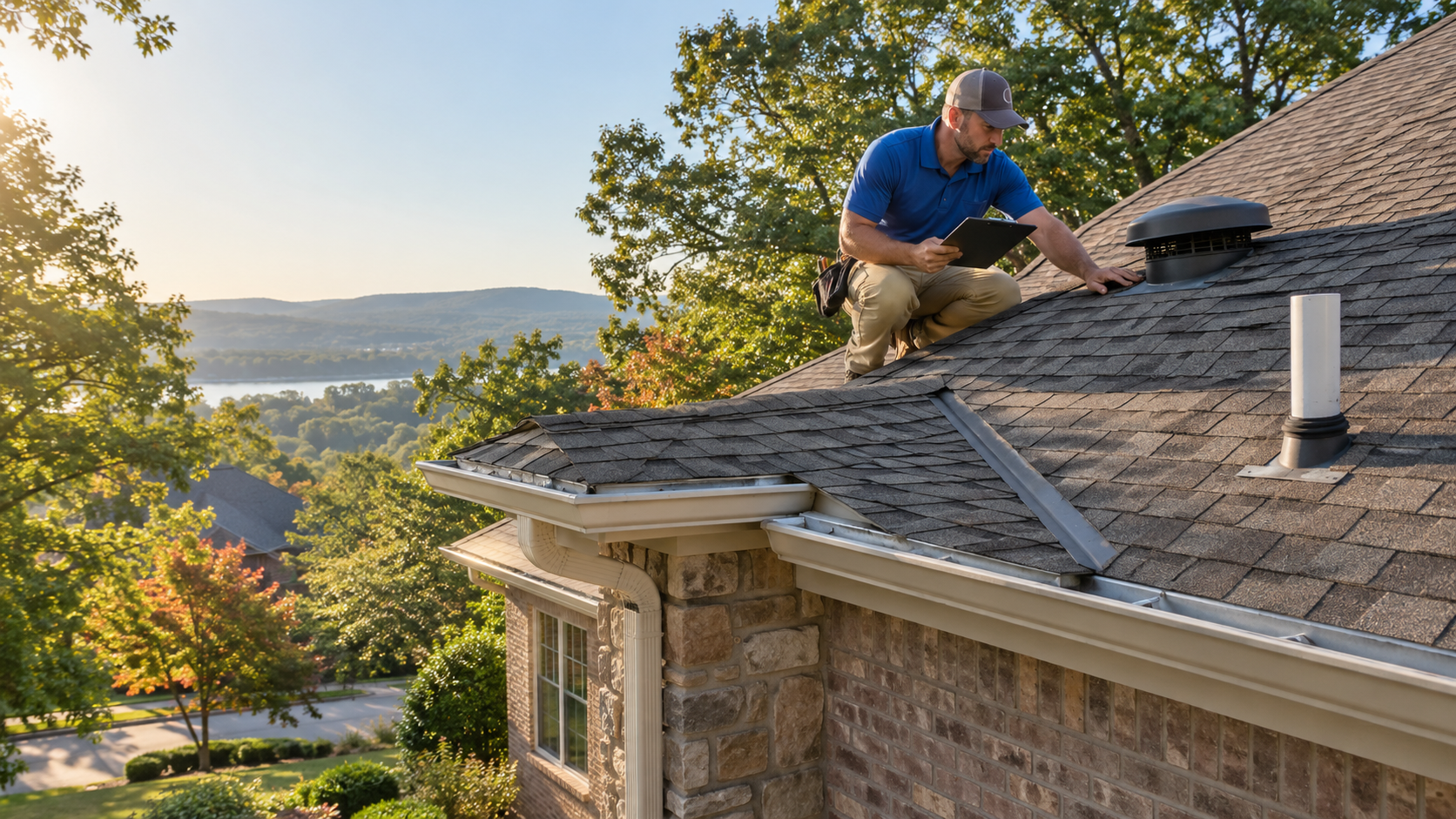
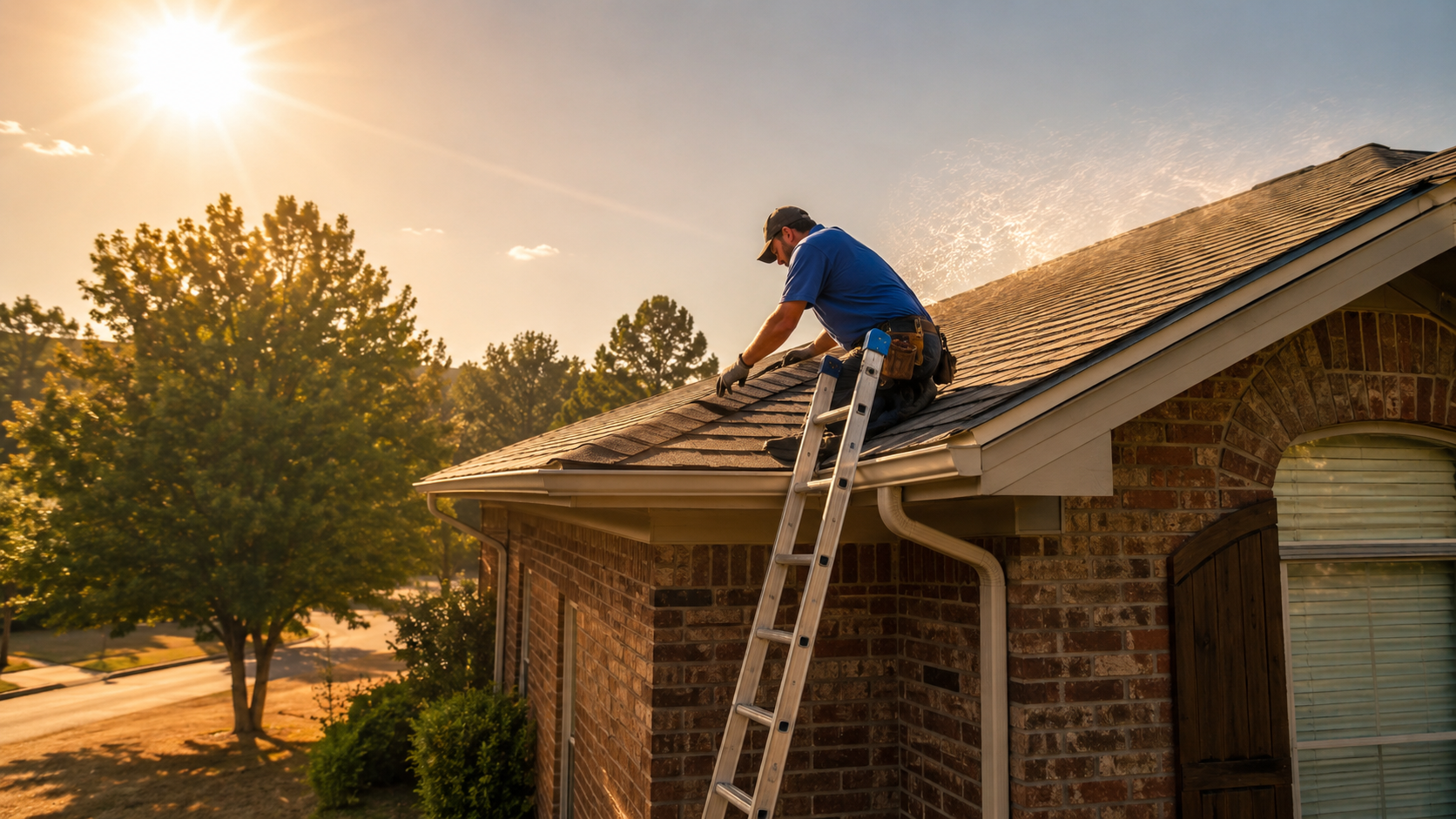
After a summer storm, we can inspect your roof and gutter system for visible damage, explain what we find, and recommend practical next steps.
Sometimes the answer is a simple gutter cleaning.
Sometimes it is a gutter repair.
Sometimes the roof needs attention.
And sometimes everything looks good, which is the best kind of news.
FAQ's
How do I know if a storm damaged my roof?
Common signs of storm damage include missing shingles, lifted shingles, granules in the gutters, water stains on ceilings, damaged flashing, dents on vents, and shingles or roof pieces in the yard.
Can hail damage gutters?
Yes. Hail can dent gutters, downspouts, flashing, roof vents, and other metal surfaces. If your gutters are dented after a storm, your roof may also need to be inspected.
Should I inspect my gutters after heavy rain?
Yes. After heavy rain, check for overflowing gutters, sagging sections, clogged downspouts, debris buildup, water pooling near the foundation, and gutters pulling away from the home.
Can clogged gutters cause roof damage?
Yes. Clogged gutters can cause water to back up near the roof edge, spill behind fascia, and overflow near siding and foundation areas. Over time, this can lead to expensive water damage.
Should I climb on my roof after a storm?
No. Storm-damaged roofs can be slippery and unsafe. It is better to inspect from the ground and call a professional if you notice warning signs.
When should I call for a roof inspection after a storm?
Call for an inspection if you see missing shingles, dents, leaks, gutter damage, branches on the roof, water stains, or granules collecting near downspouts.
This is paragraph text. Click it or hit the Manage Text button to change the font, color, size, format, and more. To set up site-wide paragraph and title styles, go to Site Theme.