Why Your Gutters Overflow During a Heavy Arkansas Rain — Even When They Look Clean
Clean-looking gutters can still overflow when a Central Arkansas downpour hits. The problem may be hidden inside a downspout, caused by poor gutter pitch, or simply be more water than the system can move efficiently.
Key Takeaways
- Gutters can overflow even when the visible gutter channel looks completely clean.
- A partially blocked downspout is one of the most common places for a hidden drainage problem.
- Incorrect gutter pitch can prevent water from moving quickly enough toward the downspout.
- Gutters that have pulled away from the fascia can develop low spots where water collects and spills over.
- Some gutter systems may not have enough capacity for the amount of roof runoff produced during an intense downpour.
- Downspout placement and the number of downspouts can affect how quickly a gutter system drains.
- Repeated gutter overflow can put unnecessary water around the fascia, siding, landscaping, and foundation.
You cleaned the gutters. You can see the bottom of them. There isn't a pile of leaves anywhere.
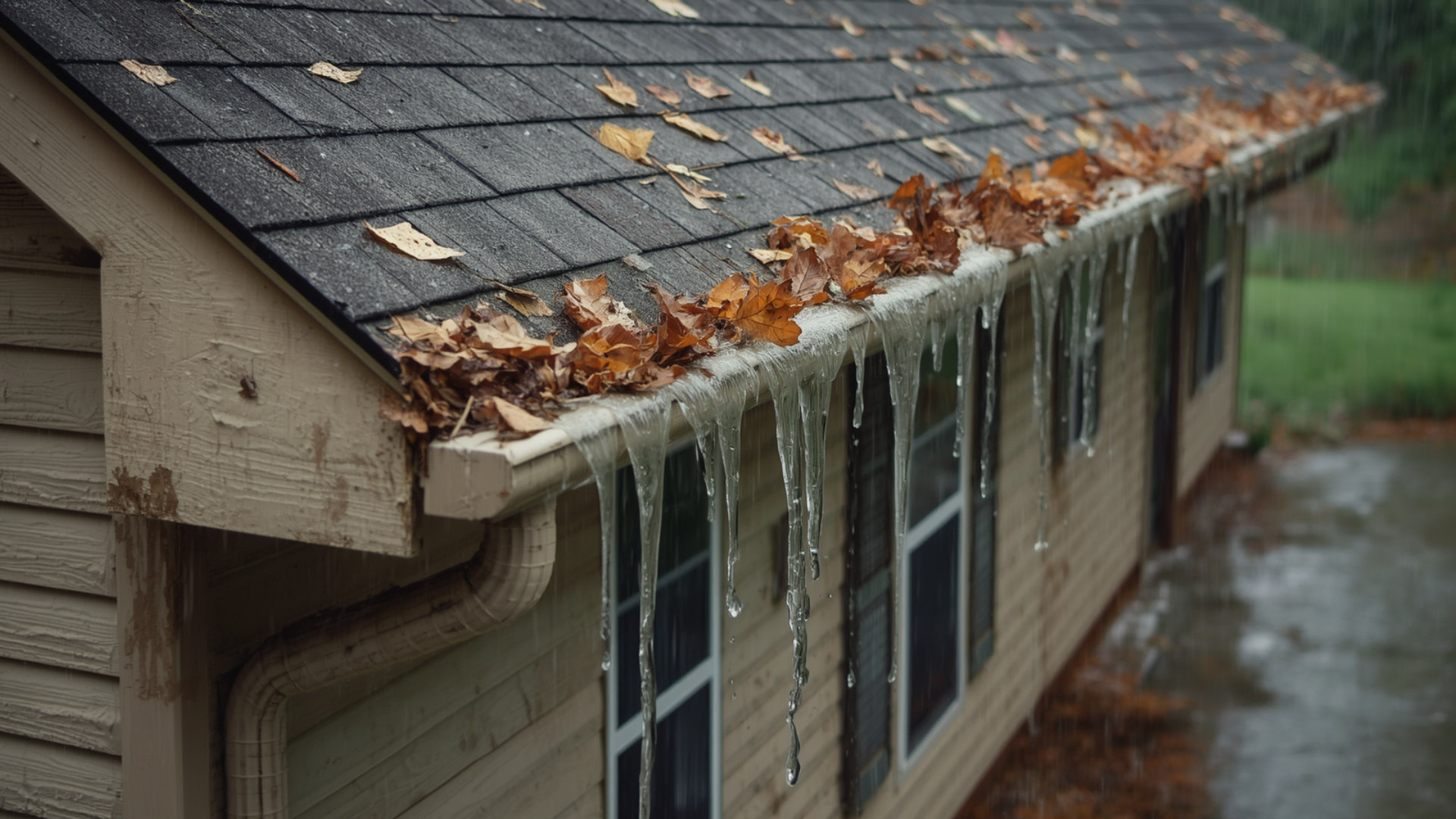
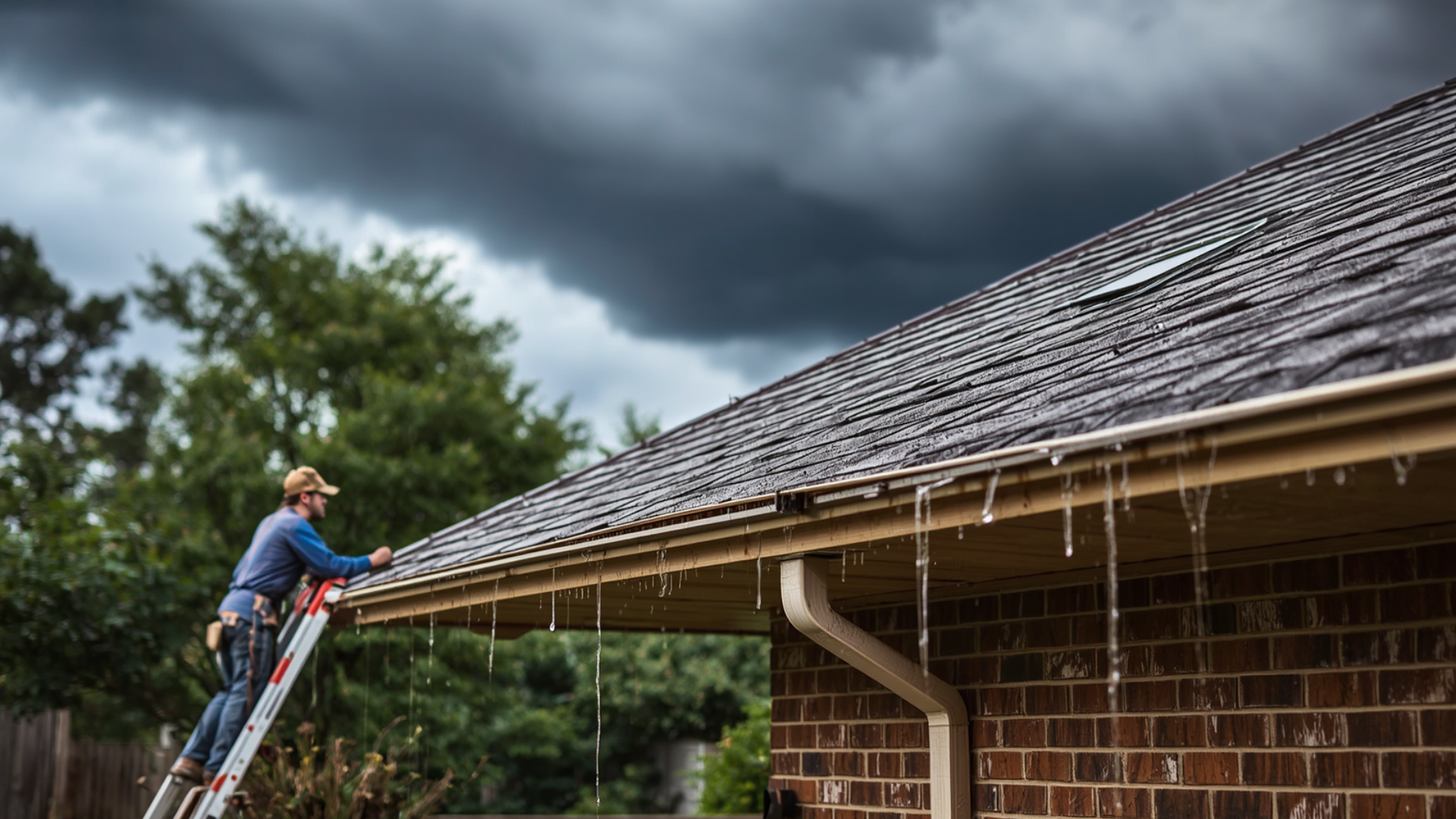
Then an Arkansas thunderstorm rolls through and water starts pouring over the edge like the gutters aren't even there.
If gutters overflow during heavy rain despite looking clean, the problem is usually somewhere in the way water is moving through the system. A partially clogged downspout, poor gutter pitch, sagging section, inadequate drainage capacity, or problem at the gutter outlet can all cause water to back up and spill over.
The location of the overflow can often give us the first clue about what is wrong.
Why Do Clean Gutters Overflow During Heavy Rain?
A gutter overflows when rainwater enters the system faster than the system can move it through the downspouts and away from the house.
Leaves are only one possible reason.
Think of your gutter system as a drainage path.
Water travels:
Roof → gutter → outlet → downspout → ground drainage
A restriction or problem anywhere along that path can slow the entire system.
During light rain, you may never notice it.
During one of those heavy Central Arkansas downpours, the weakness becomes obvious very quickly.
Could the Downspout Be Clogged Even If the Gutters Are Clean?
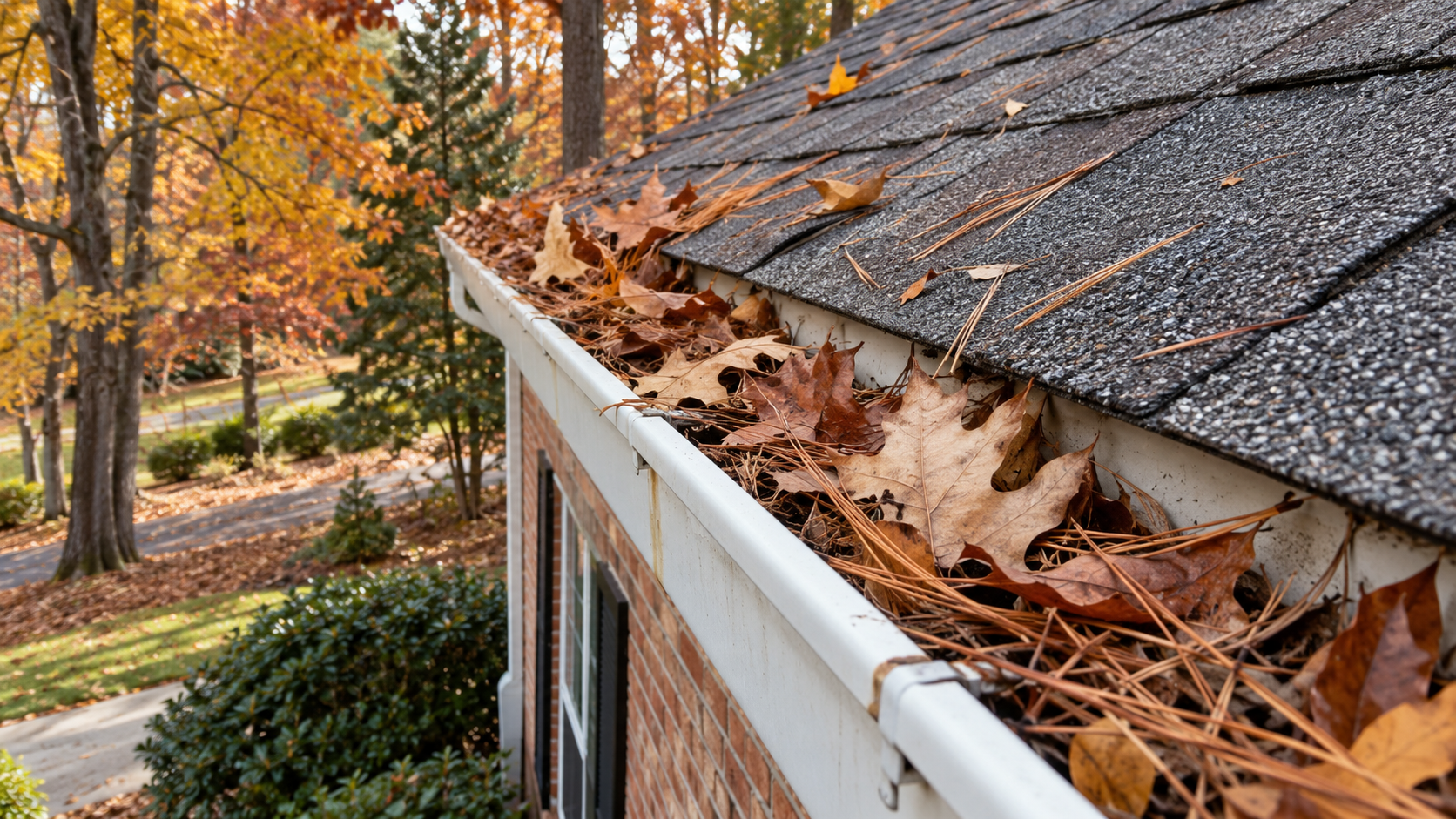
Yes. A gutter can look completely clean while leaves, pine needles, roofing debris, small twigs, or other material is restricting the downspout below the gutter opening.
This is one of the first places we would look.
Debris often collects around the opening where the gutter connects to the downspout. Material can also move farther down into an elbow where homeowners cannot see it from above.
A partial blockage can be especially deceptive.
Water may drain perfectly well during a light rain.
But when rain begins falling faster, the downspout cannot keep up. Water backs up into the gutter until it spills over the front or rear edge.
Signs of a Possible Downspout Blockage
Watch for:
- water spilling over near one downspout
- very little water coming from the bottom of the downspout during heavy rain
- water backing up at the gutter outlet
- unusual dripping from downspout seams
- water shooting backward or sideways near an elbow
- one gutter section overflowing while another drains normally
Sometimes the easiest time to identify a gutter problem is while it is actually raining.
You can often see exactly where the system stops working.
Just stay on the ground. A thunderstorm is not the time to climb a ladder for a closer look.
Can Gutters Be Pitched the Wrong Way?
Yes. Gutters need a slight slope toward the downspouts so gravity can move water through the system. If the pitch is wrong, water can sit in low spots or move too slowly during heavy rain.
A gutter should look fairly level from the ground, but it isn't actually supposed to be perfectly level.
It needs enough slope to move water toward its outlet.
Problems can develop when:
gutters were installed with insufficient pitch
a section has shifted
hangers have loosened
fascia has deteriorated
the gutter has begun sagging
previous repairs changed the alignment
If you regularly see standing water inside a gutter long after the rain stops, pitch may be part of the problem.
Why Gutter Pitch Matters More During Heavy Rain
A small drainage problem may not matter much during a gentle shower.
An intense summer storm is different.
Thousands of gallons of water can land on a residential roof during a significant rainfall. That water has to move off the roof, into the gutters, through relatively small outlets, down the downspouts, and away from the house.
If the gutter is holding water instead of directing it toward the outlet, its available capacity drops quickly.
Then the next wave of runoff goes over the edge.
Can Gutters Be Too Small for Heavy Arkansas Rain?
Yes. In some situations, the size, design, condition, or downspout configuration of a gutter system may not handle roof runoff efficiently during very intense rainfall.
Gutter capacity is affected by more than the width of the gutter.
Important factors include:
- roof size
- roof pitch
- how much roof area drains into each gutter section
- number of downspouts
- downspout size
- location of downspouts
- gutter size
- gutter pitch
- roof valleys that concentrate water in one area
A steep roof can move water very quickly.
Roof valleys can also send a large amount of runoff toward one relatively small section of gutter.
That means a gutter may work perfectly well along most of the house but consistently overflow at one particular spot.
Why Does My Gutter Overflow Under a Roof Valley?
Roof valleys concentrate runoff from two roof slopes into a narrow area, which can send a much heavier stream of water toward one section of gutter.
This is a common place to see overflow during heavy rain.
You may notice what looks like a miniature waterfall coming off the roof.
That doesn't automatically mean the entire gutter system needs to be replaced.
The problem could involve:
- gutter capacity at that location
- gutter placement
- water overshooting the gutter
- improper pitch
- an outlet positioned too far away
- a restriction farther downstream
The location and pattern of the overflow matter.
That's why diagnosing the problem is usually more useful than simply cleaning the gutters again and hoping for the best.
Could Sagging Gutters Cause Overflow?
Yes. A sagging gutter creates a low point where water can collect instead of flowing toward the downspout.
Gutters are attached to the fascia with hangers or other fastening systems.
Over time, sections can shift because of:
- loose fasteners
- damaged fascia
- accumulated weight
- previous storm damage
- tree limbs
- improper installation
- normal wear
A small sag may not look dramatic from the ground.
But it can be enough to create a pool of standing water.
During the next downpour, that pool reduces how much additional water the gutter can hold.
Overflow follows.
What If Water Is Running Behind the Gutter Instead of Over the Front?
Water running behind a gutter may indicate that roof runoff is not entering the gutter correctly or that there is an issue near the roof edge, flashing, drip edge, or gutter attachment.
This is different from ordinary overflow.
Homeowners sometimes see water dripping between the gutter and fascia and assume the gutter is simply full.
It may not be.
If water consistently gets behind the gutter, it can expose fascia and other building materials to repeated moisture.
That deserves attention because the real problem may be above or behind the visible gutter.
Why Does Gutter Overflow Matter?
Repeated overflow sends roof runoff somewhere it wasn't intended to go. That can expose parts of the home and surrounding property to unnecessary water.
Depending on where the water lands, overflowing gutters can contribute to problems involving:
Fascia
Water repeatedly spilling behind or around the gutter can keep fascia boards wet.
Siding
Overflow can send water down exterior walls and siding.
Landscaping
A concentrated stream of roof runoff can wash out mulch, soil, or flower beds below.
Foundation Areas
The gutter system's job doesn't end at the roofline.
Water needs to be carried away from the house.
When gutters overflow repeatedly, more water can collect near the perimeter of the home.
Walkways and Entrances
Overflow above a porch, sidewalk, or doorway can create a mess every time it rains.
The important point is that gutters are not just decorative trim around your roof.
They are part of your home's water-management system.
Where Should Downspouts Send the Water?
Downspouts should direct roof runoff away from the foundation and toward an appropriate drainage area rather than allowing large amounts of water to collect immediately beside the house.
This is the part of the gutter system homeowners sometimes forget.
The gutter may successfully capture the water.
The downspout may successfully move it to the ground.
But then what?
If the downspout simply dumps large amounts of water next to the foundation, the system has only done half its job.
Watch what happens at the bottom of your downspouts during rain.
Look for:
- water immediately flowing back toward the house
- standing water around the foundation
- washed-out soil
- downspout extensions that have disconnected
- crushed or damaged extensions
- water crossing sidewalks or entrances
- underground drains backing up
This is why we look at gutters as a complete drainage system rather than just a metal channel along the roof.
Why Heavy Arkansas Rain Exposes Gutter Problems
Central Arkansas thunderstorms can produce intense periods of rainfall, which expose drainage problems that may never appear during lighter rain.
A gutter system doesn't necessarily fail all at once.
Most problems reveal themselves gradually.
A downspout becomes partly restricted.
A hanger loosens.
One section begins to sag.
A gutter shifts slightly away from the roofline.
Then a heavy storm arrives.
Suddenly the system has to move far more water in a short period of time, and the weak spot becomes obvious.
Homeowners throughout Little Rock, North Little Rock, Cabot, Jacksonville, Sheridan, and surrounding Central Arkansas communities see these kinds of heavy-rain events every year.
That's why watching your gutter system during an actual storm can tell you things that looking at a dry gutter cannot.
What Should You Check When Your Gutters Overflow?
Start by identifying exactly where the overflow occurs and whether water is successfully exiting the nearby downspout.
From the safety of the ground, look for:
- Is the entire gutter overflowing or only one section?
- Is overflow happening near a downspout?
- Is water coming out of the bottom of that downspout?
- Does the gutter appear to sag?
- Does water collect in one low spot after the storm?
- Is the water overshooting the gutter completely?
- Is water running behind the gutter?
- Does the problem happen below a roof valley?
- Is water pooling near the foundation?
- Are downspout extensions attached and working?
Those observations can make diagnosing the problem much easier.
Does an Overflowing Gutter Need to Be Repaired or Replaced?
Not necessarily. The right solution depends on what is causing the overflow and the condition of the existing gutter system.
Sometimes the solution may be straightforward, such as clearing a blocked outlet or correcting a small drainage issue.
Other situations can involve:
- repairing loose sections
- correcting gutter pitch
- replacing damaged hangers
- repairing fascia
- changing downspout placement
- adding drainage capacity
- repairing damaged gutter sections
- replacing an aging or improperly sized gutter system
The important thing is to solve the actual cause.
Cleaning a clean gutter isn't much of a repair strategy.
Frequently Asked Questions
Why do my gutters overflow only when it rains hard?
Heavy rain produces roof runoff faster than light rain. If the gutter system has a partially blocked downspout, poor pitch, inadequate capacity, or another drainage restriction, it may handle light rain but overflow during a downpour.
Can my downspout be clogged if I can't see any debris?
Yes. Debris can become trapped inside the downspout or one of its elbows where it isn't visible from the gutter.
Why does only one section of my gutter overflow?
A localized overflow often points to a problem near that area, such as a downspout restriction, sagging gutter, roof valley, incorrect pitch, or concentrated roof runoff.
Why is water sitting in my gutters after it stops raining?
Some remaining moisture is normal, but significant standing water can indicate improper gutter pitch or a low spot in the system.
Why does water shoot over my gutter instead of going into it?
Fast-moving runoff from a steep roof or roof valley can sometimes overshoot the gutter. Gutter position, size, roof configuration, and drainage design may all play a role.
Can overflowing gutters damage my house?
Repeated overflow can expose fascia, siding, landscaping, and areas around the foundation to concentrated roof runoff.
Should I clean my gutters again if they look clean?
If the visible gutter channel is already clear, repeated cleaning may not solve the problem. The downspout, gutter pitch, outlet, gutter alignment, or system capacity may need to be checked.
Should I inspect my gutters while it's raining?
Watching from the ground during rain can be extremely useful because you can see where water is overflowing or failing to drain. Do not climb onto the roof or a ladder during a storm.
Tired of Watching Your Gutters Turn Into Waterfalls?
If your gutters look clean but still overflow every time Central Arkansas gets a heavy rain, there is probably a reason.
At MT's Gutters & Roofing, we help homeowners throughout Little Rock, North Little Rock, Cabot, Jacksonville, Sheridan, and surrounding Central Arkansas communities identify gutter drainage problems and determine whether the system needs cleaning, repair, adjustment, or replacement.
If your gutters aren't moving water where it needs to go, contact our team to request an inspection or estimate.