Signs Your Roof May Need Repair Before the Next Big Storm
Small roof problems are easier to fix before heavy rain, wind, and hail turn them into leaks, stains, and emergency repairs.
The worst time to find out your roof has a problem is during a downpour.
That is when a small issue becomes a bucket-in-the-living-room situation. Nobody wants that. Buckets belong in garages, not beside the sofa.
For homeowners in Little Rock, North Little Rock, Cabot, Jacksonville, Sheridan, and surrounding Central Arkansas areas, late summer storms can bring heavy rain, wind, hail, and flying debris. If your roof already has weak spots, the next storm may expose them fast.
The good news is that most roof problems give warning signs before they become major repairs.
You just have to know what to look for.
If your roof looks worn, damaged, or questionable before the next storm, get it checked before heavy rain makes the problem worse.
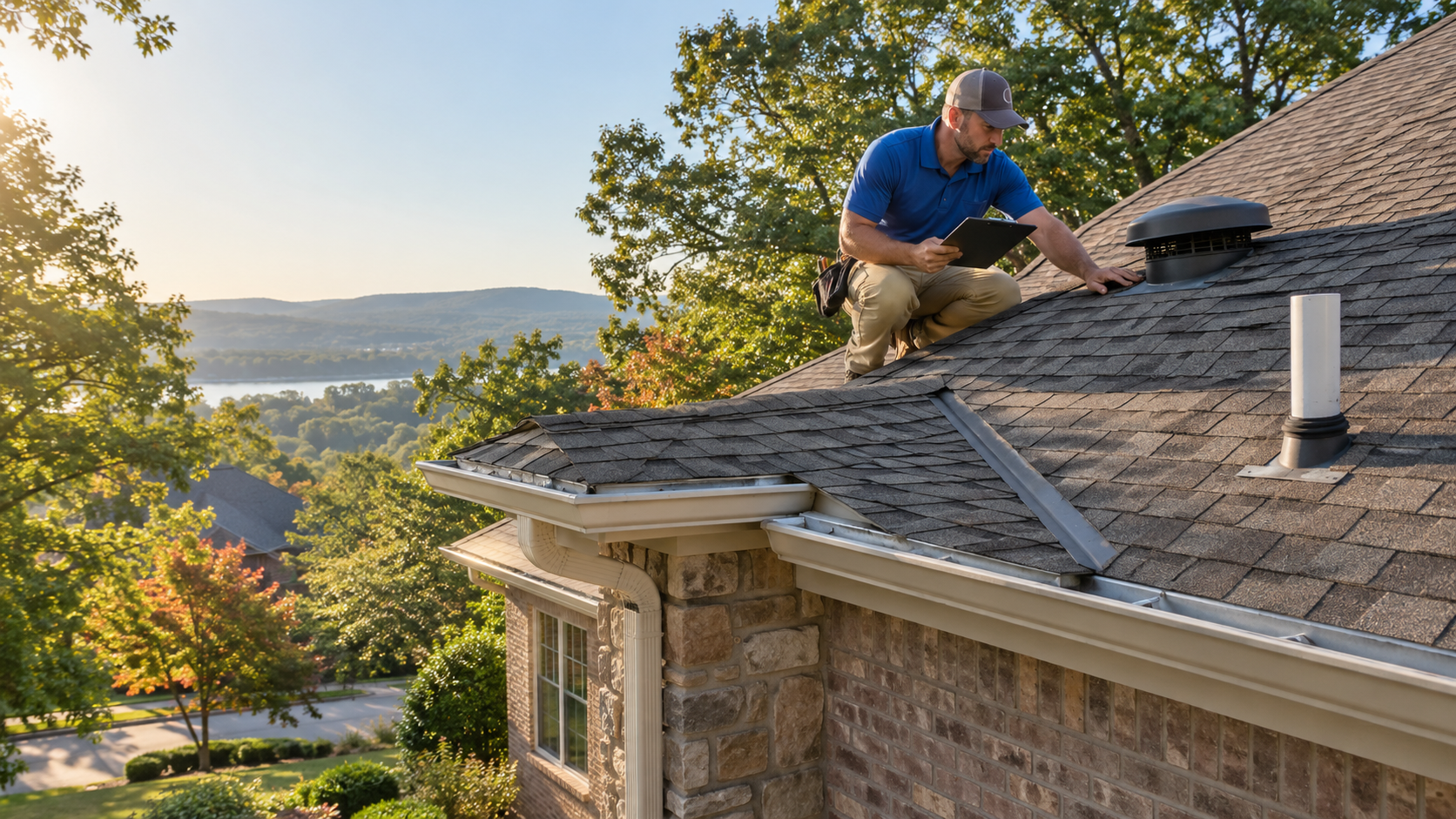
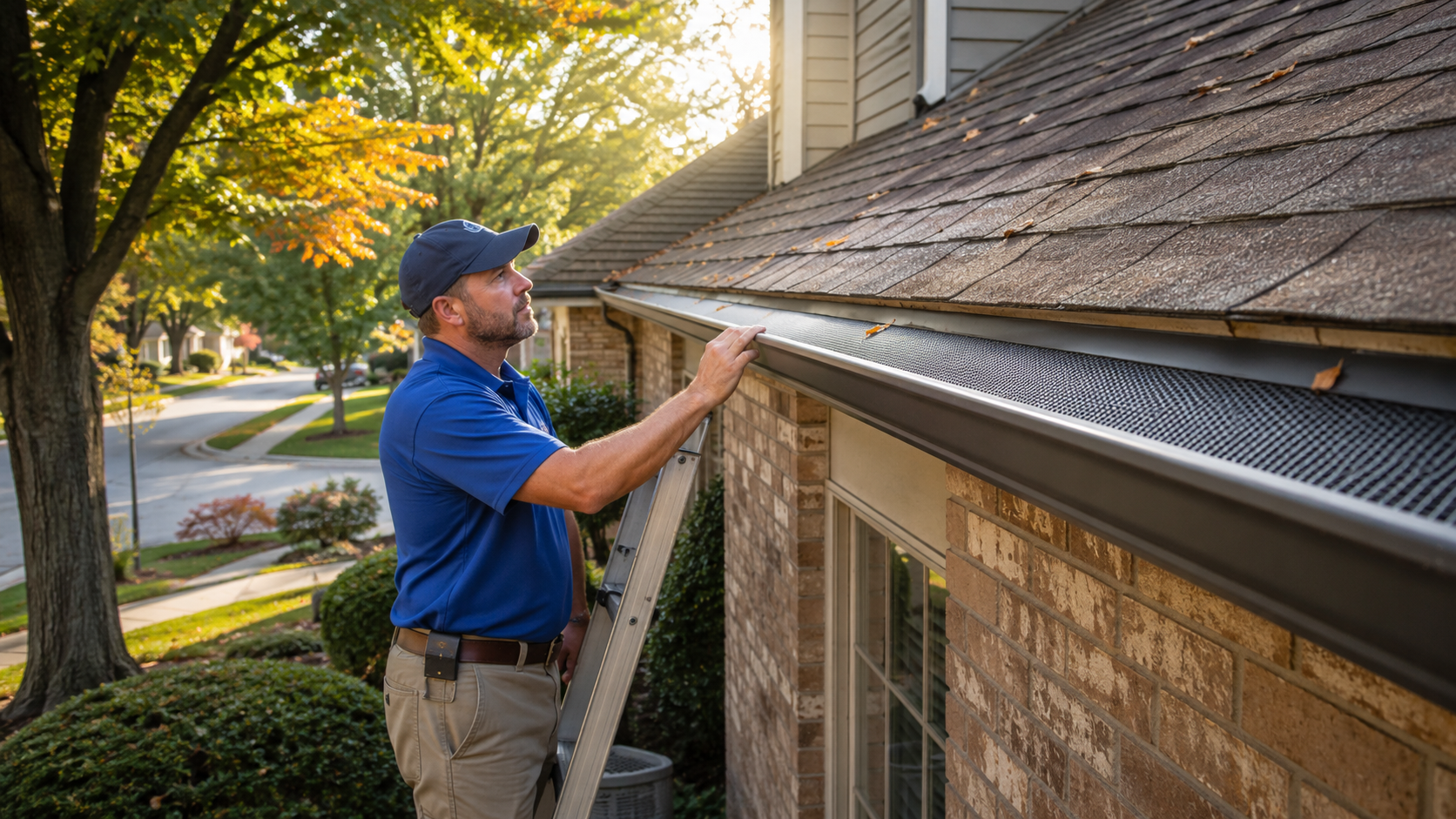
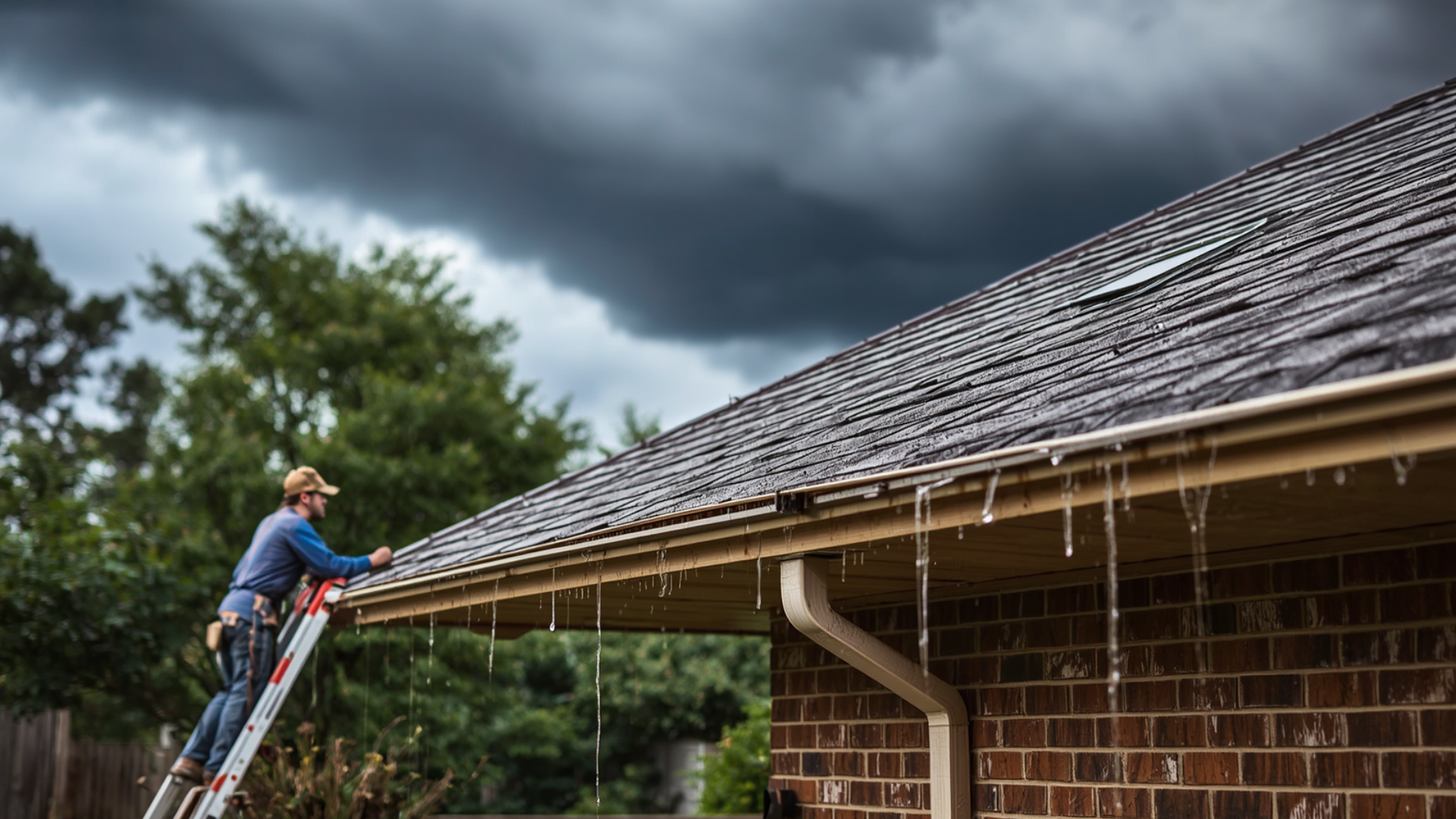
MT’s Gutters & Roofing can inspect your roof and gutter system, explain what we find, and recommend the right next step for your home.
We proudly serve Little Rock, North Little Rock, Cabot, Jacksonville, Sheridan, and surrounding Central Arkansas communities.
Key Takeaways
- A roof problem is usually easier and less expensive to fix before the next major storm.
- Missing, lifted, curled, or cracked shingles are common warning signs that your roof may need repair.
- Water stains, attic moisture, and musty smells can point to a roof leak.
- Damaged flashing around chimneys, vents, valleys, and skylights can allow water into the home.
- Clogged or damaged gutters can make roof problems worse by forcing water back toward the roofline.
- Granules in the gutters may be a sign that shingles are aging or damaged.
- A professional roof inspection can help identify small problems before wind, hail, or heavy rain makes them worse.
Why Roof Repairs Should Happen Before the Storm
A roof is supposed to shed water away from your home.
But when shingles are missing, flashing is loose, gutters are clogged, or roof edges are damaged, water can find a way inside.
Storms do not usually create every problem from scratch. Many times, storms reveal problems that were already there.
A lifted shingle becomes a leak.
Loose flashing lets water around a vent.
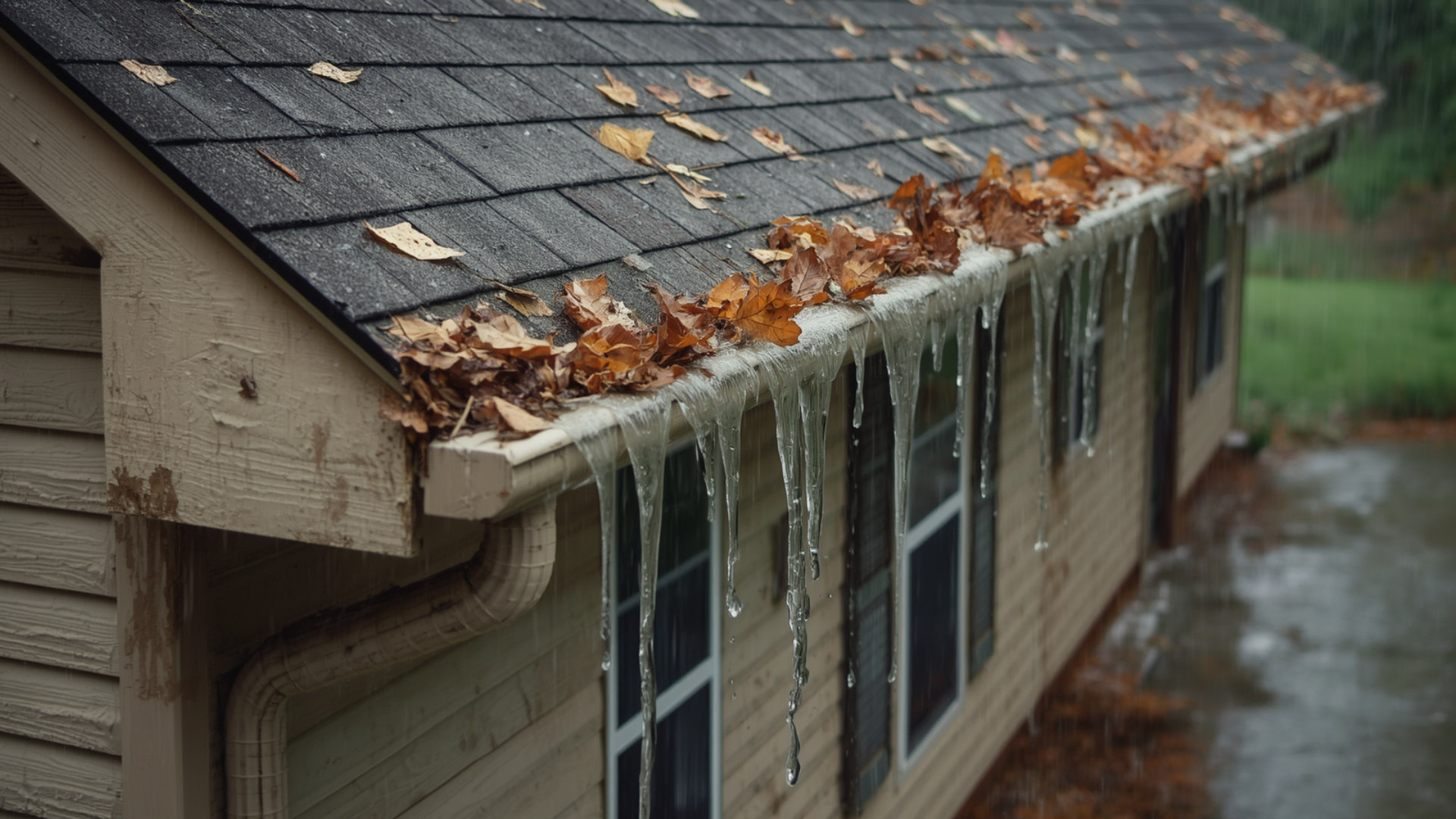
A clogged gutter backs water toward the roofline.
A soft fascia board pulls the gutter loose.
A small ceiling stain becomes a bigger ceiling stain.
That is why preventative roof repair matters.
You are not just fixing what looks bad.
You are closing the door before the storm tries to walk through it.
Sign 1: Missing Shingles
Missing shingles are one of the clearest signs your roof needs attention.
If you see bare spots on the roof or find shingles in your yard after a storm, do not ignore it. Shingles are there to protect the layers underneath. When they are missing, the roof is exposed.
Missing shingles can lead to:
Roof leaks
Damaged underlayment
Water reaching the roof decking
Interior ceiling stains
Mold or mildew in damp areas
More shingles loosening in the next storm
Even one missing shingle can matter if it is in the wrong place.
From the ground, missing shingles may look like dark patches or uneven areas on the roof. If something looks different than the rest of the roof, it is worth having checked.
Sign 2: Lifted or Curled Shingles
Shingles do not have to be completely missing to cause trouble.
Lifted, curled, or buckled shingles can also let wind-driven rain get underneath the surface. During a strong storm, lifted shingles may tear off completely.
Common causes include age, heat, poor ventilation, storm damage, or previous installation issues.
Warning signs include:
Shingle edges curling upward
Shingles lifting from the roof surface
Buckled areas
Uneven rows
Shingles that flap or move in the wind
Visible gaps under shingles
If shingles are not lying flat, they are not protecting the roof the way they should.
That is not a design feature. That is a warning label.
Sign 3: Cracked or Damaged Shingles
Cracked shingles can happen from age, heat, hail, wind, or impact from debris.
A cracked shingle may still be on the roof, but it may not be sealing properly. Water can work its way through damaged areas and create problems underneath.
Signs of cracked or damaged shingles include:
Visible splits
Broken corners
Chipped edges
Surface bruising
Dark spots
Hail marks
Loose shingle pieces around the yard
After a storm, it is smart to walk around your property and check for shingle pieces near downspouts, landscaping, patios, and driveways.
You do not need to climb on the roof.
Just look for clues from the ground.
Sign 4: Granules in the Gutters
Those tiny rough granules on shingles are important. They help protect your roof from sun and weather exposure.
Over time, shingles lose granules naturally. But if you start noticing a large amount of granules in your gutters or near downspouts, your roof may be aging or damaged.
You may see:
Dark sandy material near downspouts
Granules collecting inside gutters
Bare-looking patches on shingles
Uneven roof color
More granules after hail or heavy rain
Granule loss does not always mean immediate roof replacement. But it is a sign the roof should be inspected.
Your gutters can tell you a lot about your roof.
They are basically the roof’s receipts.
Sign 5: Water Stains on Ceilings or Walls
Interior water stains are one of the warning signs homeowners notice first.
A roof leak may show up as:
Brown ceiling stains
Water spots on walls
Peeling paint
Bubbling drywall
Drips during rain
Musty smells
Damp insulation in the attic
A stain does not always appear directly under the roof problem. Water can travel along rafters, pipes, or drywall before it shows up inside the home.
That is why finding the source of a leak can be tricky.
If you see a water stain, do not just paint over it and hope for the best. That is the home repair version of putting tape over a check engine light.
Sign 6: Damaged Flashing
Flashing is the metal material used around roof areas where water needs extra direction and protection.
You often find flashing around:
Chimneys
Vents
Skylights
Roof valleys
Wall connections
Dormers
Plumbing pipes
If flashing is cracked, rusted, loose, bent, or poorly sealed, water can get into the home.
Flashing problems are common leak sources because these areas already deal with more water movement than flat sections of the roof.
Signs of flashing issues may include:
Rust
Gaps
Loose metal
Cracked sealant
Water stains nearby
Missing pieces
Bent sections after storms
Before heavy rain hits, flashing should be checked carefully.
A small gap around flashing can become a big headache in a hurry.
Sign 7: Sagging or Soft Areas
A roof should not sag.
If you notice a dip, wave, or soft-looking area in the roofline, that may point to decking problems, trapped moisture, structural issues, or long-term water damage.
Possible signs include:
Uneven rooflines
Low spots
Dips between rafters
Soft areas under shingles
Water pooling in certain sections
Interior ceiling sagging
This is not something to put off.
Sagging can indicate a more serious problem underneath the roof surface.
If your roofline looks like it is tired of participating, get it checked.
Sign 8: Damaged or Clogged Gutters
Your gutters and roof work together.
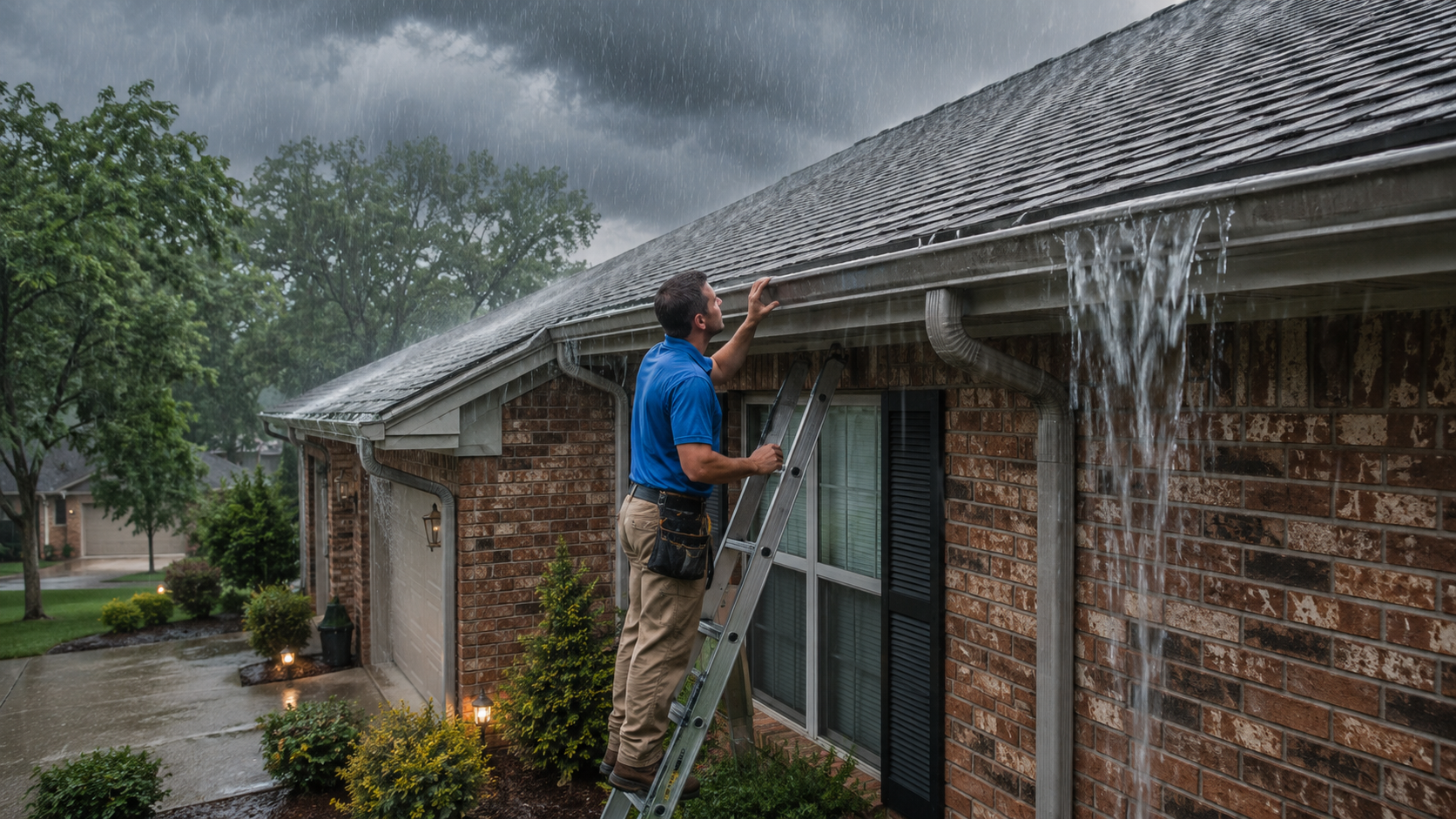
If the gutters are clogged, sagging, leaking, or pulling away from the home, water may not drain properly from the roofline.
That can lead to:
Water backing up near shingles
Fascia damage
Soffit damage
Roof edge leaks
Water spilling down siding
Foundation drainage problems
Signs your gutters may be affecting your roof include:
Water spilling over the gutters
Sagging gutter sections
Gutters pulling away from fascia
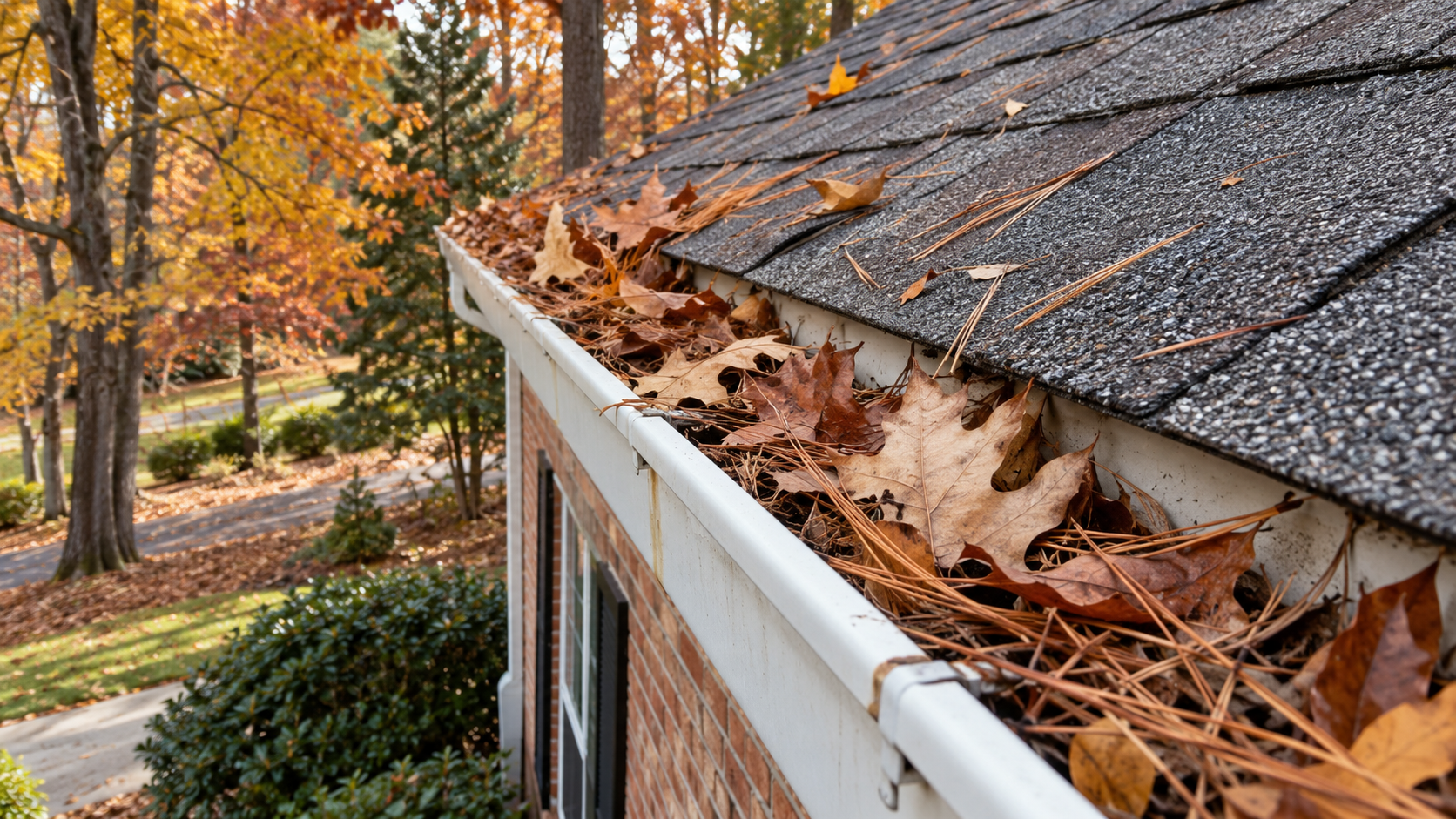
Leaves or debris packed inside
Downspouts not draining
Water stains below the roofline
Rot near fascia boards
Sometimes what looks like a roof problem is really a gutter problem.
Sometimes it is both.
That is why a roof and gutter inspection together makes sense before storm season.
Sign 9: Branches or Debris on the Roof
After windy weather, check the roof from the ground.
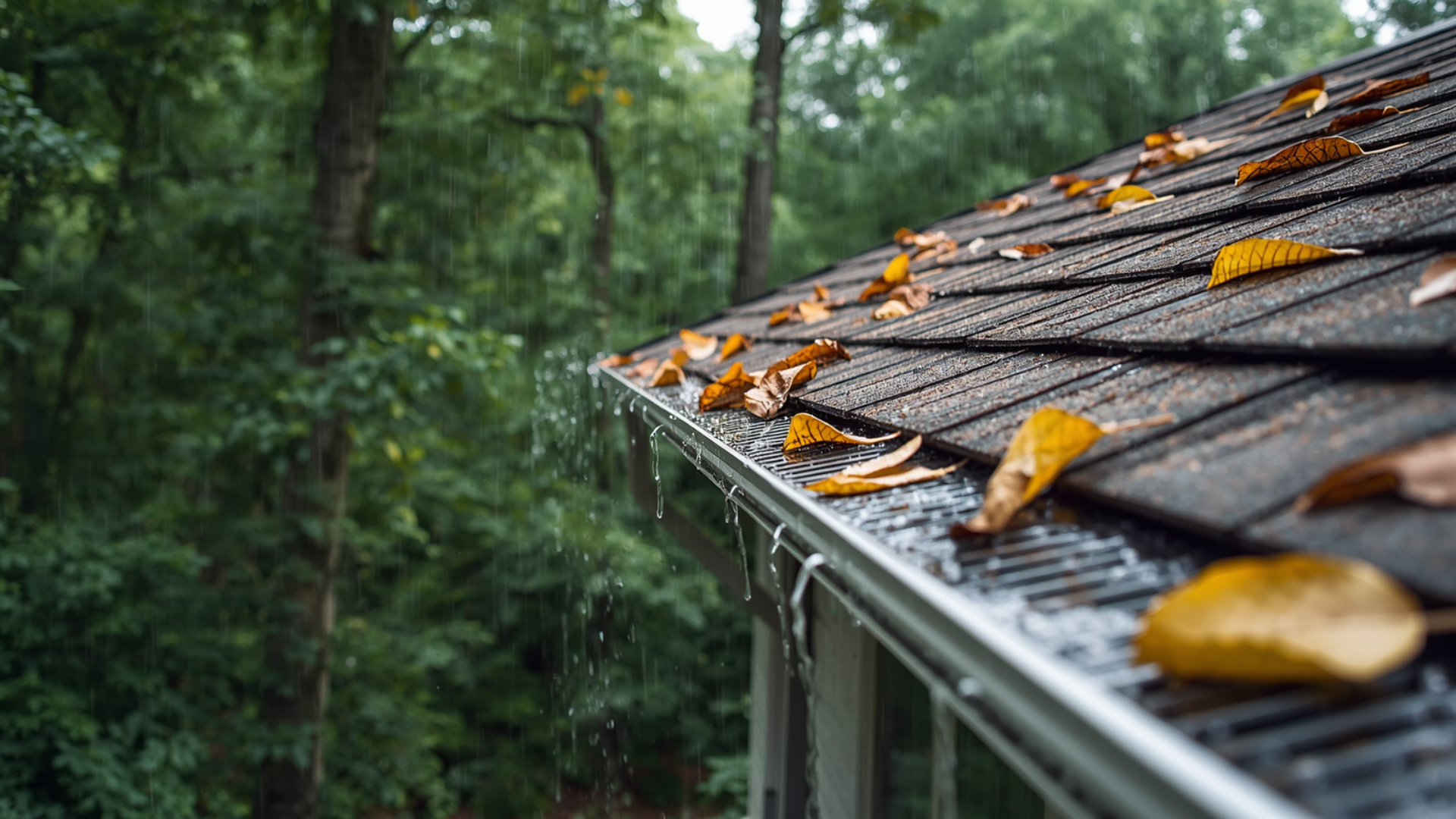
Branches, limbs, and debris can damage shingles, loosen gutters, dent flashing, or block water flow. Even if a branch does not punch through the roof, it can scrape shingles and remove protective granules.
Watch for:
Tree limbs resting on the roof
Piles of leaves in roof valleys
Debris near gutters
Scraped shingle areas
Broken branches near the home
Blocked downspouts
Roof valleys are especially important because they move a lot of water. If debris builds up there, drainage can suffer.
And when water cannot move, it starts looking for another route.
Spoiler alert: that route is usually expensive.
Sign 10: Your Roof Is Getting Older
Age matters.
Even if your roof looks fine from the driveway, older roofing materials may be more vulnerable to storm damage. Heat, sun, wind, rain, and hail all take a toll over time.
Older roofs may show:
Granule loss
Curling shingles
Brittle shingles
Frequent small leaks
Loose flashing
More storm-related damage
Uneven color
More frequent repair needs
If your roof is older and you have not had it inspected recently, scheduling a check before the next big storm is a smart move.
You do not need to wait until something leaks to find out where things stand.
What to Check From the Ground Before the Next Storm
You do not need to climb on the roof. In fact, you should not.
A wet, steep, or damaged roof is dangerous.
Instead, walk around the outside of your home and look for:
Missing shingles
Uneven roof areas
Shingle pieces in the yard
Granules near downspouts
Loose gutters
Overflowing gutters
Branches on the roof
Damaged flashing you can see from the ground
Water stains under gutters
Fascia damage
Pooling water near the foundation
Inside the home, check:
Ceiling stains
Musty smells
Damp attic areas
Discolored insulation
Water around vents or chimneys
Peeling paint near ceilings
If something looks off, it probably deserves a closer look.
Should You Repair or Replace the Roof?
Not every roof issue means you need a full replacement.
Many problems can be repaired if they are caught early.
Roof repair may be enough for:
A few missing shingles
Minor flashing issues
Small leaks
Localized storm damage
Loose ridge caps
Minor roof edge damage
Roof replacement may be worth discussing if:
The roof is old
Damage is widespread
Leaks keep coming back
Shingles are brittle or failing
There is major granule loss
Decking is damaged
Storm damage affected large areas
The only way to know is to have the roof inspected.
A good contractor should explain what they find clearly and recommend the practical next step.
No scare tactics.
No pressure.
Just the facts.
Why Waiting Can Cost More
Small roof problems rarely stay small.
A lifted shingle can turn into a missing shingle.
A missing shingle can expose the decking.
Exposed decking can lead to leaks.
Leaks can damage drywall, insulation, flooring, and framing.
The same goes for flashing, gutters, fascia, and roof valleys.
A small repair before a storm is usually better than an emergency repair after one.
Preventative maintenance is not glamorous.
But neither is calling someone at 9 p.m. because rain is dripping into the hallway.
How MT’s Gutters & Roofing Helps Central Arkansas Homeowners
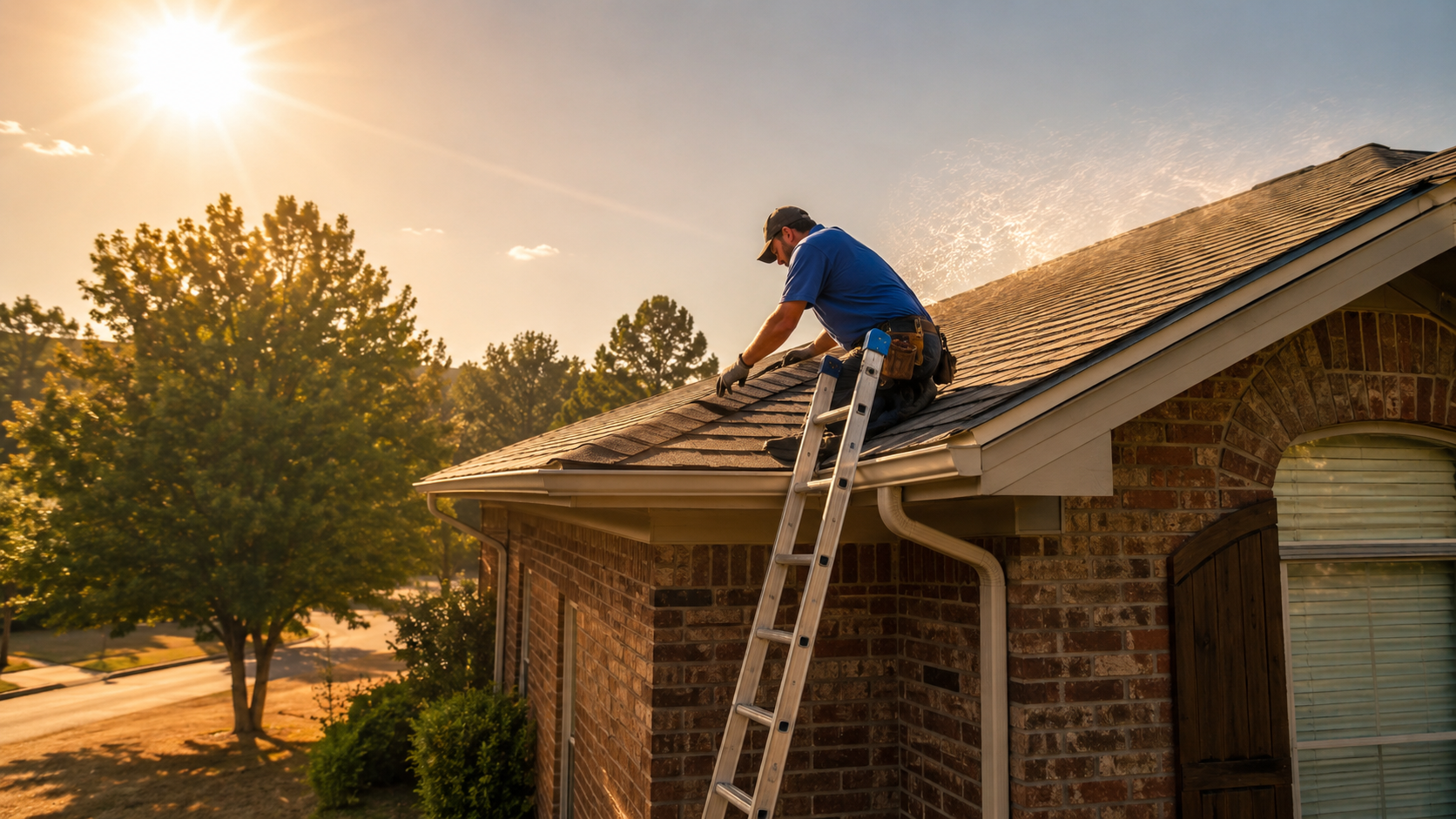
MT’s Gutters & Roofing helps homeowners protect their homes with roof inspections, roof repair, gutter repair, gutter cleaning, gutter guards, and seamless gutter installation.
We serve Little Rock, North Little Rock, Cabot, Jacksonville, Sheridan, and surrounding Central Arkansas communities.
If your roof has warning signs before the next big storm, we can inspect the problem, explain what we find, and help you decide the right next step.
Sometimes it is a simple repair.
Sometimes the gutters need attention.
Sometimes the roof needs more serious work.
The goal is to catch the problem before the next storm makes the decision for you.
Final Thoughts
Your roof does not have to be leaking today to need attention.
Missing shingles, curling shingles, damaged flashing, granules in the gutters, clogged downspouts, and water stains are all signs your home may be vulnerable before the next big storm.
A little prevention now can save a lot of damage later.
Do not wait until a small roof problem becomes a ceiling stain.
FAQ
How do I know if my roof needs repair?
Your roof may need repair if you notice missing shingles, lifted shingles, cracked shingles, water stains, damaged flashing, granules in the gutters, sagging areas, or leaks during rain.
Should I repair my roof before storm season?
Yes. Small roof problems are usually easier to fix before heavy rain, wind, or hail makes them worse. A roof inspection before storm season can help identify weak spots.
Can a small roof leak get worse?
Yes. Small leaks can spread over time and damage insulation, drywall, roof decking, framing, and interior finishes. It is better to repair leaks early.
What are signs of storm damage on a roof?
Signs of storm damage may include missing shingles, dented vents, damaged flashing, granules near downspouts, lifted shingles, branches on the roof, and new water stains inside the home.
Can clogged gutters cause roof problems?
Yes. Clogged gutters can cause water to back up near the roof edge, damage fascia and soffit, and contribute to roofline leaks or moisture problems.
Should I climb on my roof to check for damage?
No. It is safer to inspect from the ground and call a professional if you notice warning signs. Roofs can be slippery, steep, or unstable after storms.